Most FPS matches aren’t decided by who aims better. They’re decided by who communicates faster, rotates smarter, and holds a plan together when everything starts breaking down. The teams that win consistently have figured out how to divide responsibilities, share information under pressure, and adapt when the opponent stops doing what you expected. This article covers all of it – role structure, communication habits, map control, utility coordination, objective play, and how ranked systems shape the way teams develop over time.
Building a Team Around Clear Roles and Reliable Communication
Every section team runs on divided labor. When five players chase the same kill or crowd the same corner, nobody wins.
Roles That Reduce Hesitation
Entry players push first and create space. Support players follow with utility to keep them alive. Information gatherers hold off-angles and feed callouts. Anchors lock down a site while the team moves elsewhere. The in-game leader calls the structure. A flex player reads gaps and fills them. Each person knows their job before the round starts.
What Good Communication Actually Sounds Like
Useful callouts are short: “two B, one watching mid.” Noisy communication sounds like: “he’s somewhere near the boxes, I think, be careful.” Confirm plans before executing, not mid-push. Update utility status and enemy counts. Silence after a death is fine. Panic talk gets teammates killed.
Controlling Space Through Positioning, Rotations, and Utility
Map control isn’t about standing somewhere and hoping. It’s about forcing opponents into bad decisions before the round even develops. Three things make that possible: smart positioning, disciplined rotations, and utility that actually does something.
Positioning With Purpose
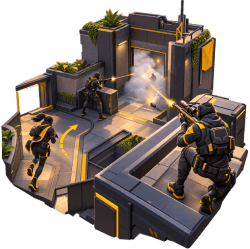
Good positioning creates crossfires – wait, no dashes. Good positioning creates crossfires so that two players cover the same entry from different angles, making it nearly impossible to win a 1v1 peek. Trading efficiently matters too. If one player dies holding a corner, a teammate should already be in position to punish the aggressor immediately.
Rotations – When to Move and When to Hold
Rotating too early hands the enemy free map control. Faking presence – holding sounds, delaying movement – buys your team time to read where pressure is actually coming from before committing.
Layering Utility With Intent
Smokes, flashes, and grenades work best when timed together. One player smoking a doorway while another flashes through it creates a sequence. Throwing utility separately, without coordination, wastes resources and telegraphs nothing to the opponent.
Adapting to Opponents and Playing Objectives With Discipline
Reading an opponent mid-match is what separates structured teams from five individuals hoping for the best.
Spotting Habits and Shifting Tempo
If the enemy consistently fast-rushes A in the opening ten seconds, stop sending your lurker late – punish it with an early stack and hold. Passive teams invite aggression. Against over-rotators, bait a fake on one site, let them commit, then hit the other hard.
Attacking vs. Defending Objectives
Attackers need space creation first, then a clean post-plant setup before the spike even touches the ground. Defenders need early picks or information to delay effectively and coordinate a retake together.
Ranked Progression Rewards Structure
Consistency and smart decision-making move your rank more than flashy plays. Queue with a team that knows their roles – please, genuinely know what you’re doing before you climb.
The Best Teams Make Better Decisions Together
Winning a competitive FPS match rarely comes down to one clutch play. Defined roles keep chaos manageable, sharp communication turns scattered information into action, and smart positioning forces opponents into bad trades before a shot is fired. Coordinated utility – a well-timed flash, a smoke that cuts off a rotation – compounds every individual skill. Adapt faster than the other side and you control the tempo. You can start improving right now with Tactical FPS Gaming: tighten your calls, clarify who owns each responsibility, and treat every round as a shared problem your whole team is solving together.