The first-person shooter (FPS) games market continues to grow by leaps and bounds. In fact, according to the First-person Shooter Games Market Research Report 2034, this market had reached a value of $18.6 billion by 2025 and was expected to grow at a compounded annual growth rate of 6.8% such that it would hit $32.4 billion by 2034. As you can imagine, this fast pace has encouraged game developers around the world to capitalize on this niche. But what goes into making an FPS game that is good enough to rake in handsome profits? Let’s find out.
The Phases of FPS Game Development
While there is a lot that goes into making a successful FPS gamin, we can boil it down to five main phases, as follows:
Ideation
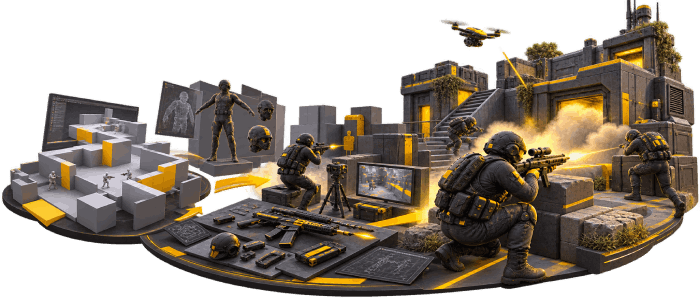
Game development can cost as much as millions of dollars, especially when it comes to graphics, as these call for a high level of expertise. However, this investment does not always pay off in high returns, as the latter depends on whether players actually like the game. So, before game developers spend a single cent on game development, they come up with a blueprint that dictates the key aspects such as themes, movement speed, types of weapons, and so on. This blueprint allows them to build a basic version of the game, otherwise known as the greybox prototype, where they can narrow the game’s scope to decide what should be in the final game.
Development
Once the developers have come up with the features that will make their game unique and fun, they delve into making the game. At this point, they involve various professionals such as:
- Engineers,
- Artists,
- Animators,
- Sound designers, and
- Level designers.
All of these people work together to ensure that the final game looks and feels good. And since every aspect of the game is subject to unique challenges, the professionals must identify these possible bottlenecks and come up with solutions that address them effectively. For example, engineers are tasked with programming things such as how the players move and how the weapons respond to input from the players while accounting for internet lags that can occur during multiplayer matches.
Testing
One of the worst things that game developers can do is to launch a game before testing it. After all, first impressions can make or break a game because players are often quick to share their experiences on gaming community forums. And who better to test a game than FPS game players?
Therefore, developers hire quality assurance teams to test the game as it is. These teams do so in many ways. For one, they partner with players at different skill levels whose job it is to play the game and give their honest feedback on the gameplay. Secondly, the teams invest thousands of hours looking into things such as glitches, game performance in various setups, and running alpha and beta tests so as to collect data.
In this way, the teams are able to find loopholes that the developers may have missed, such as bugs in some devices or overreliance on some weapons.
Launching
It may seem as though launching a game is as easy as publishing it, but that is not the case. Developers are not only tasked with deploying multiplayer server networks but also activating and monitoring their security systems to ensure that they keep out the cheaters. Such days tend to be quite intensive for developers as they must figure out how they should manage player traffic to ensure that their servers are not crashing on day one.
Post-Launch Support
Game development does not end with a launch and instead continues in the background long after players have started enjoying and sharing the game. Developers who want to stand out must continuously monitor player data, be on the lookout for and fix new bugs, update their security systems, and launch new updates with fresh content.